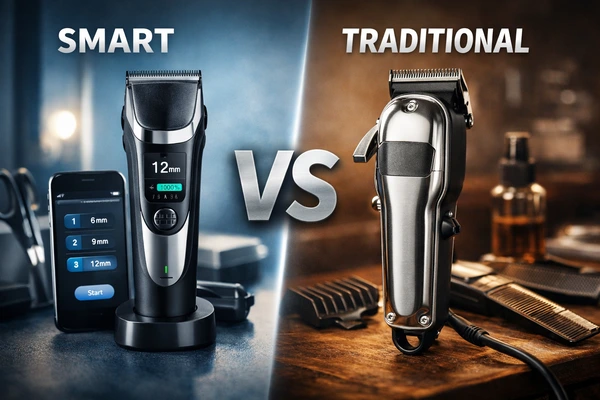
Hair clippers have come a long way. What used to be a simple buzzing tool is now turning into a smart grooming device with apps, sensors, and personalised settings. In 2026, many men are asking the same question: should you buy smart hair clippers or stick with traditional clippers?
Both options have their strengths. Some people love technology and convenience, while others trust classic barber tools that have worked for decades. This guide breaks everything down clearly, so you can decide what actually suits your grooming needs.
The Evolution of Hair Clippers in 2026
Men’s grooming has changed rapidly over the last few years. Home haircuts became more common, fade styles gained popularity, and technology entered everyday grooming tools.
Today, clippers fall into two main categories:
- Smart hair clippers with digital features and automation
- Traditional hair clippers built on power, precision, and manual control
The right choice depends on how you cut your hair, your skill level, and how much control you want.
What Are Smart Hair Clippers?
Smart hair clippers are modern grooming tools that use software and sensors to assist with cutting. Many models connect to a mobile app and guide users through the haircut process.
Some advanced models even use Artificial Intelligence to adjust cutting speed and length based on hair thickness.
Key Features of Smart Hair Clippers
- App-controlled length settings
- Built-in sensors for consistent cutting
- Preset haircut profiles
- Automatic power and heat control
- Digital battery monitoring
Brands such as Philips and Panasonic are leading this category, especially for home users who want guided grooming.
Smart clippers are designed to reduce mistakes and make haircuts easier for beginners.
What Are Traditional Hair Clippers?
Traditional hair clippers are what barbers have relied on for decades. They focus on strong motors, sharp blades, and full manual control.
These clippers do not rely on apps or software. Instead, they depend on the user’s technique and experience.
Common Features of Traditional Clippers
- Adjustable taper lever
- Corded or cordless options
- Powerful rotary or electromagnetic motors
- Durable metal blades
Professional brands like Wahl and Andis are trusted worldwide by barbers for their reliability and cutting power.
Smart vs Traditional Clippers: Key Differences
Cutting Precision
Smart clippers focus on consistency. Sensors help maintain even lengths, which is useful for self-haircuts. Traditional clippers rely on hand skill. In the right hands, they offer superior blending and detailing.
Ease of Use
Smart clippers are beginner-friendly. The app guidance reduces the learning curve. Traditional clippers take time to master, especially for fades and transitions.
Power & Performance
Traditional clippers usually win here. Their motors handle thick hair better and work longer without overheating. Smart clippers prioritise comfort and control over raw power.
Maintenance
- Smart clippers may require software updates and app support
- Traditional clippers only need blade oiling and cleaning
Which Clippers Are Better for Popular Haircuts?
Taper Fades and Skin Fades
For styles like the Taper fade, traditional clippers offer better control around blends and low lengths. Smart clippers can help beginners start a fade, but they may struggle with advanced detailing.
Buzz Cuts and Short Styles
Smart clippers perform well here thanks to preset lengths and even cutting. Traditional clippers are faster and better for bulk cutting.
Home Haircuts
Smart clippers are ideal for:
- Beginners
- Self-grooming
- Low-maintenance styles
Traditional clippers suit:
- Family haircuts
- Experienced users
- More detailed styles
Pros and Cons of Smart Hair Clippers in 2026
Advantages
- Easy for beginners
- Consistent results
- Modern features and guidance
- Less chance of uneven cuts
Limitations
- Higher price
- App dependency
- Less freedom for creative cutting
Smart clippers are perfect for people who want convenience over control.
Pros and Cons of Traditional Hair Clippers in 2026
Advantages
- Strong cutting power
- Long-lasting build
- Preferred by professionals
- Full manual control
Limitations
- Requires skill and practice
- Easier to make mistakes
- No automation or guidance
Traditional clippers remain the gold standard for barbers and serious home users.
Are Smart Hair Clippers Worth It in 2026?
Smart hair clippers are worth the money if:
- You cut your own hair regularly
- You prefer guided tools
- You want consistent results without barber skills
They may not be ideal if you enjoy manual control or already know how to fade properly.
Who Should Choose What?
Choose Smart Hair Clippers if you are:
- A beginner
- A tech lover
- Cutting hair at home
Choose Traditional Clippers if you are:
- A barber or enthusiast
- Doing taper fades or skin fades
- Looking for long-term durability
The Future of Hair Clippers
The future of grooming is moving towards automation. We can expect:
- AI haircut mapping
- Cloud-based haircut profiles
- Advanced Sensor technology
However, traditional clippers are not going anywhere. Skill-based tools will always have a place in men’s grooming.
Final Verdict:
There is no single winner. Smart hair clippers are better for ease, guidance, and home use. Traditional clippers are better for power, precision, and professional results. Your choice should depend on your haircut style, experience level, and how much control you want over your grooming routine. In 2026, the best clippers are simply the ones that match your lifestyle and skills.
FAQs
Are smart hair clippers better than traditional clippers?
Smart hair clippers are better for beginners and home users because they offer guided cutting, preset lengths, and consistent results. Traditional clippers are better for experienced users and barbers who want full manual control and stronger cutting power.
Are smart hair clippers worth the money in 2026?
Yes, smart hair clippers are worth it in 2026 if you regularly cut your hair at home and want reliable results without professional skills. They cost more, but features like sensors, app control, and automation add real value for self-grooming.
Do professional barbers use smart hair clippers?
Most professional barbers still prefer traditional clippers from brands like Wahl and Andis. Smart clippers are mainly designed for home users rather than high-volume barber shops.
Which clippers are better for taper fades?
Traditional clippers are better for taper fades because they offer precise manual control, adjustable taper levers, and stronger motors. Smart clippers can help beginners start a fade but are limited when it comes to advanced blending.
Are smart hair clippers good for beginners?
Yes, smart hair clippers are excellent for beginners. Features like app guidance, automatic length control, and cutting sensors reduce mistakes and make learning easier.
Do smart hair clippers use AI?
Some smart hair clippers use Artificial Intelligence to analyse hair density and adjust cutting performance. However, most rely on sensor technology and software presets rather than full AI decision-making.
Which clippers last longer: smart or traditional?
Traditional clippers usually last longer because they have fewer electronic components and no software dependency. Smart clippers can still be durable, but long-term use depends on app support and battery lifespan.
Can smart clippers replace traditional clippers completely?
No, smart clippers cannot fully replace traditional clippers. They are designed for convenience and consistency, while traditional clippers remain essential for professional-level fades, detailing, and creative control.