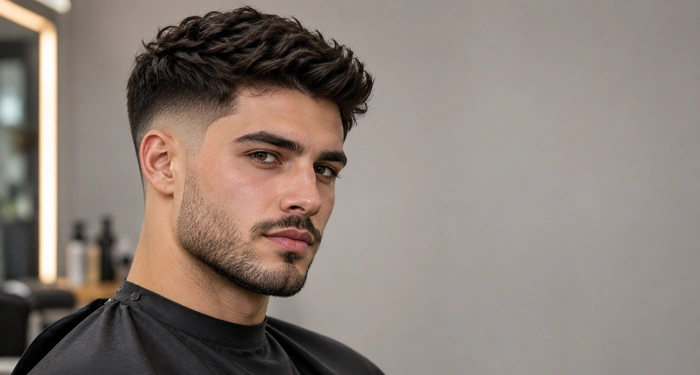
A high taper fade is a men’s haircut that blends the hair shorter around the upper temples and neckline while leaving the main sides relatively full. It creates a defined outline without necessarily fading the entire sides. Explore 13 variations for curly, straight, Afro-textured and longer hair, with practical advice to help you choose the right cut.
What Is a High Taper Fade?
The high refers to the taper’s position around the temples, not necessarily a fade extending across the entire upper sides. The barber blends from shorter hair near the hairline into longer hair above, with a separate taper at the nape.
A full high fade generally covers a broader area of the sides and back. Because terminology differs between barbers, use reference photographs to agree on the height, shortest length and exact blending area before cutting.
13 High Taper Fade Haircut Styles
The right variation depends on the natural shape and texture of your hair, how much length you want to retain and how much time you spend styling it.
1. High Taper Fade With Curly Hair
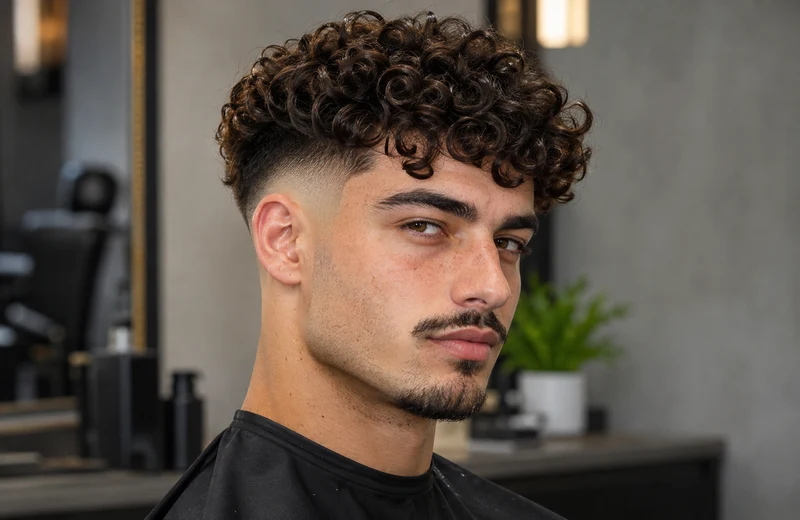
Best for: Defined curls with enough length to retain their natural shape. A high taper cleans up the temples while preserving movement on top. Keep some weight along the upper sides to avoid an overly narrow silhouette. Ask your barber to judge curl length when dry: curls can contract considerably. A light leave-in conditioner or curl cream adds definition without flattening them.
2. High Taper Fade With Straight Hair
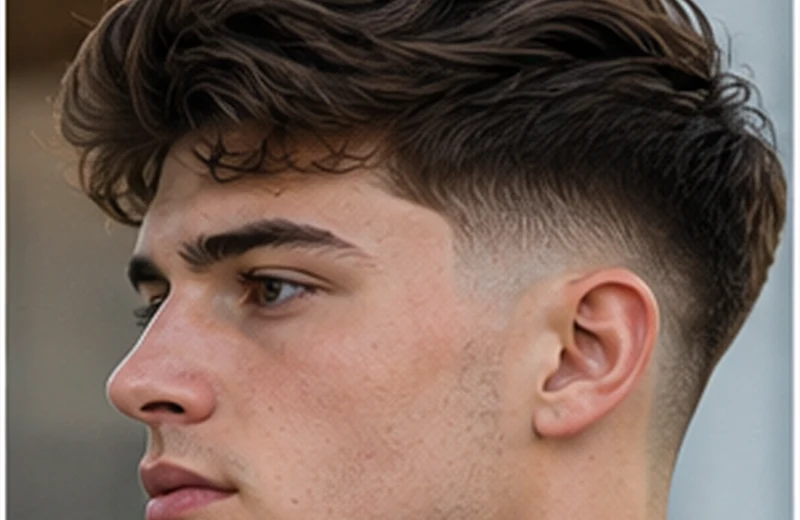
Best for: Straight hair styled as a crop, side part or short quiff. Smooth blending matters because straight hair exposes abrupt length changes. A textured fringe helps hair that naturally grows forward; a quiff needs more length and daily shaping. Fine hair usually responds better to lightweight matte products than heavy wax.
3. Textured High Taper Fade
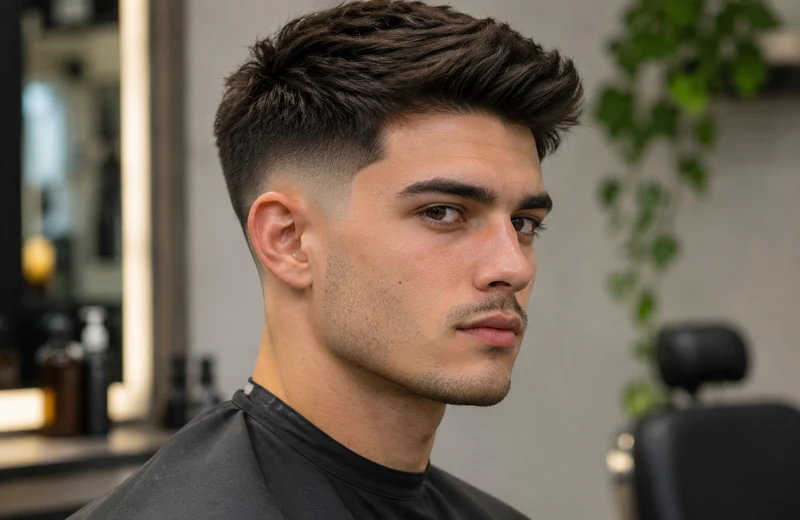
Best for: Medium-density hair and an intentionally relaxed finish. Layering and controlled point cutting can create movement above the taper, but excessive thinning may leave fine hair sparse or disrupt tightly curled patterns. Work a little matte paste through dry ends rather than coating the roots.
4. Short High Taper Fade
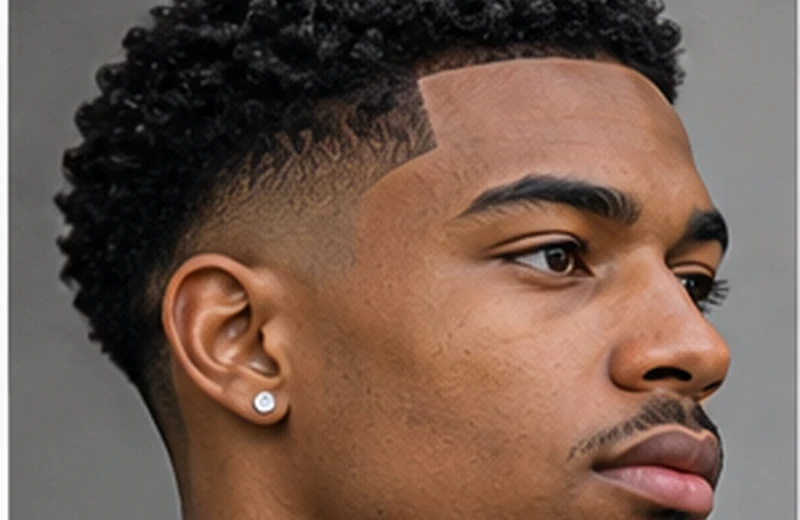
Best for: Minimal styling with a compact crop or crew-cut top. The distinction comes from the temple and neckline blending, not dramatic height above. Leave a little additional length around a strong crown swirl to prevent the hair from sticking up unexpectedly.
5. High Taper Fade Afro
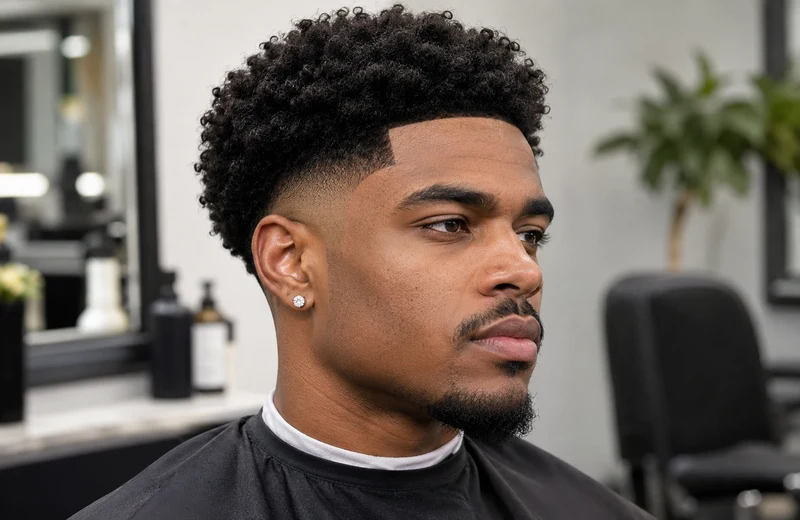
Best for: Natural Afro-textured hair with a shaped or rounded top. Preserve the intended width and outline before trimming the temples and nape. A line-up is optional; pushing it behind the natural hairline can make regrowth uneven. Moisturise as needed and detangle gently to preserve the shape.
6. High Taper Fade With Dreadlocks
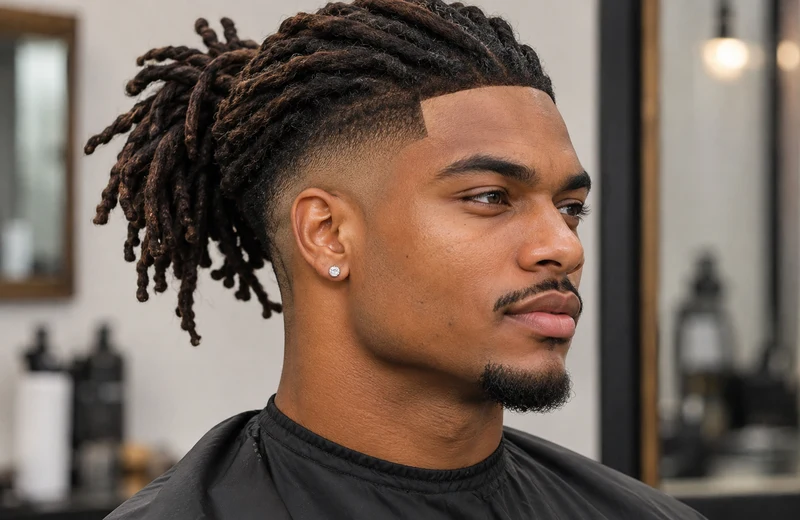
Best for: Established locs with an existing area available for tapering. Check the loc parting pattern before deciding on fade height: shaving into the bases may weaken the locs over time. Agree on a clear boundary with your barber or loctician and retain that boundary during touch-ups.
7. High Taper Fade Mullet
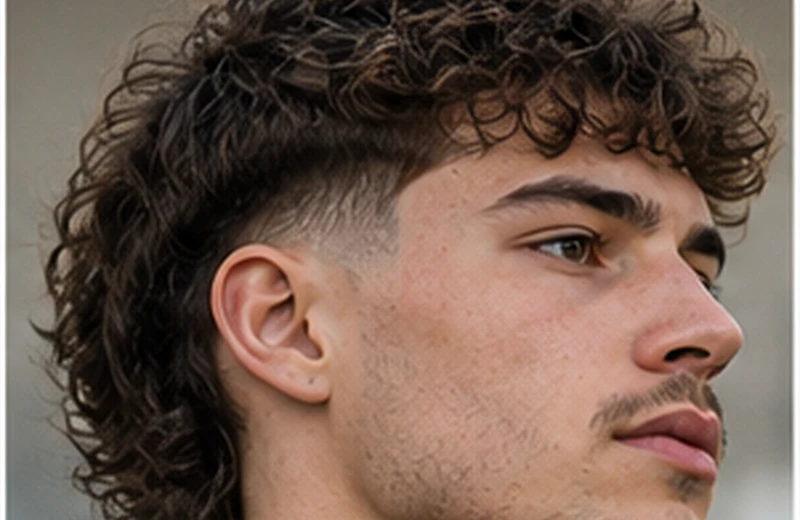
Best for: A shorter temple area combined with deliberate length at the back. Tell the barber precisely how much hair to keep behind the ears and at the nape. A conventional high neckline taper may remove the length that defines a mullet, so consider a temple-focused taper with a longer rear section.
8. High Taper Fade Buzz Cut
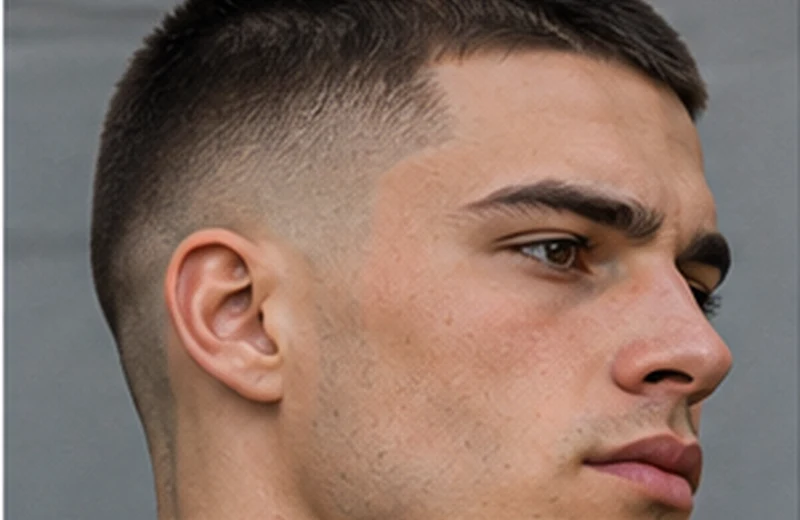
Best for: Short, uniform hair with more defined edges. Keep one guard length over most of the head and gradually shorten the temples and neckline. Start with a slightly longer guard if you are uncertain about scalp visibility, thinning or the shape of your head.
9. High Taper Fade With Long Hair
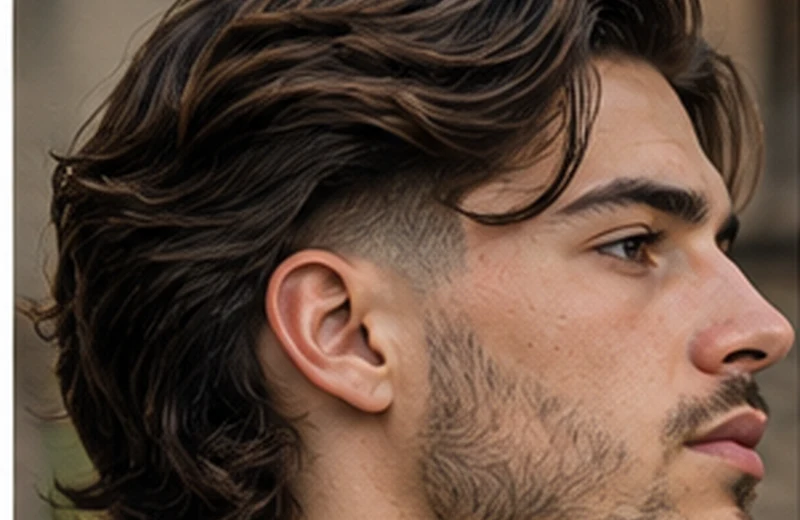
Best for: Long tops and tied-back styles that feel bulky around the temples. A limited taper can tidy the ears without sacrificing length. Check how the haircut looks when tied up: taking the fade too high may leave visible gaps beside the longer sections.
10. High Taper Skin Fade
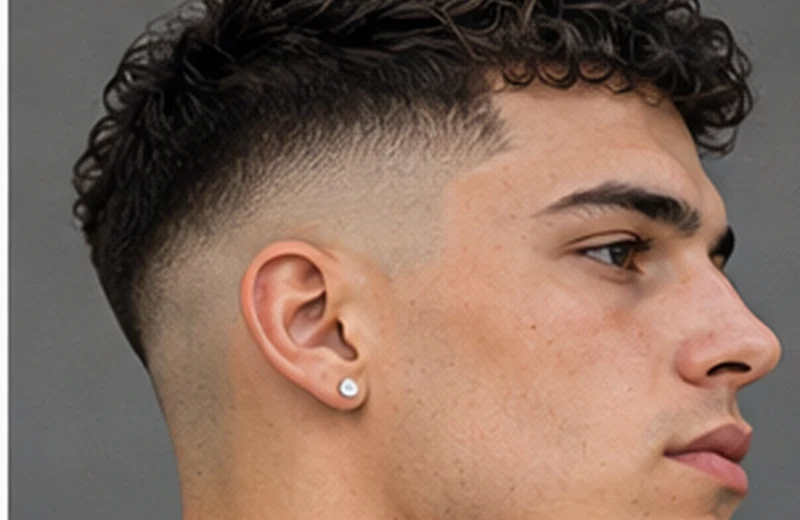
Best for: A very close finish at the temples and nape. Skin describes the shortest length, not the area covered. Request a skin taper restricted to the edges if you want the main sides left fuller. Dark or dense hair makes regrowth contrast more visible.
11. Blowout High Taper Fade
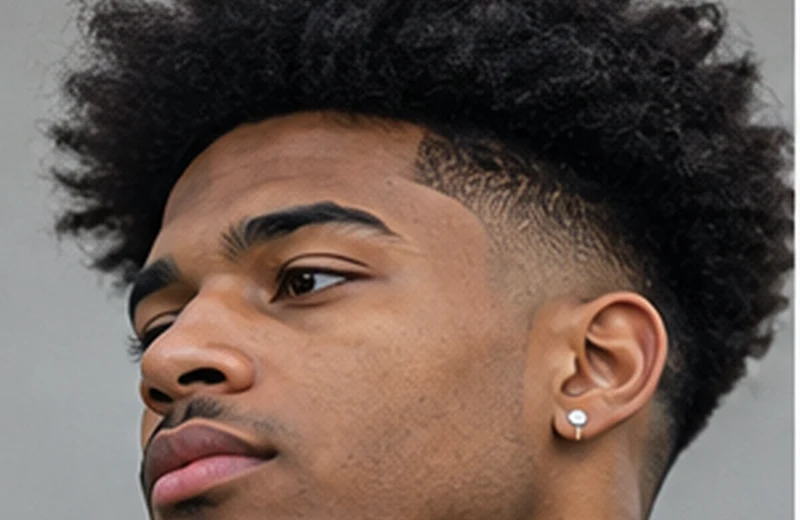
Best for: Hair with enough length and density to create a full, raised silhouette. Preserve weight through the upper sides; cutting it away can leave an unintended narrow top. Use a diffuser for curls or controlled airflow and a brush for straighter hair, with heat protection when heat styling.
12. High Taper Fade With a Defined Line-Up
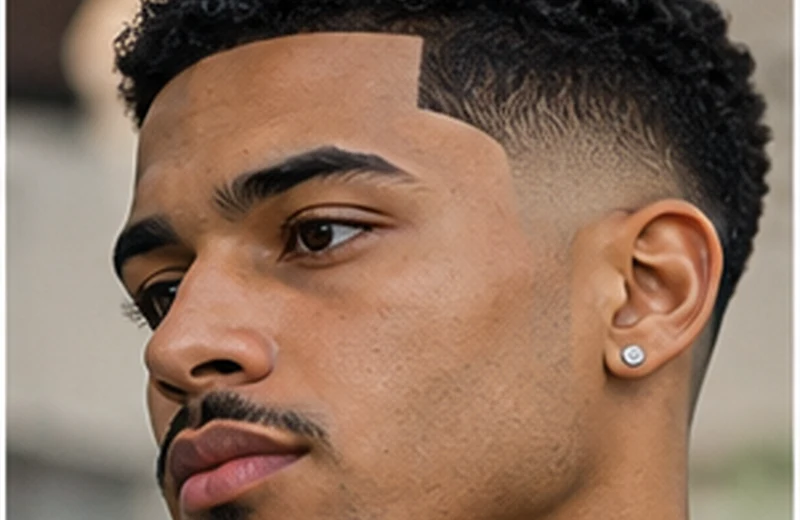
Best for: A deliberately geometric finish. A line-up creates a sharper forehead-to-temple outline, but should follow the natural hairline instead of being moved backwards for artificial symmetry. New growth will be particularly noticeable at the corners.
13. High Taper Fade With Wavy Hair
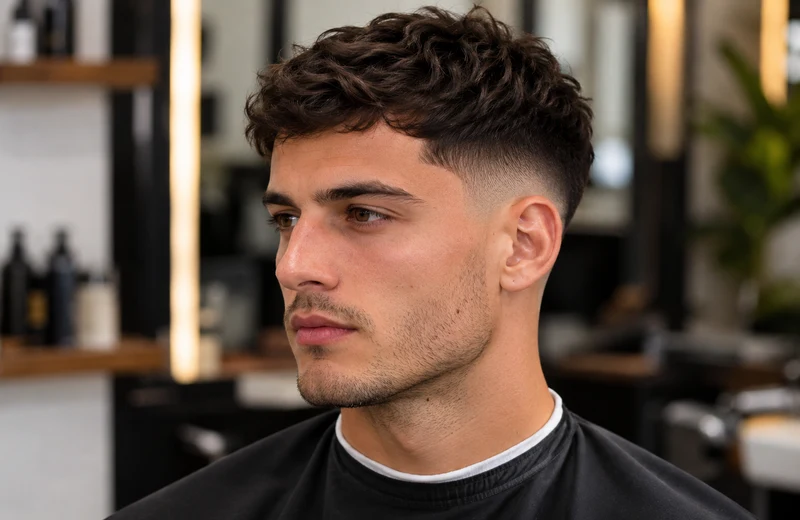
Best for: Loose waves with sufficient top length to retain their bend. A softly layered crop leaves movement, while a brushed-back finish looks tidier. Avoid cutting so short that the wave disappears. A light mousse or styling cream can control flyaways without stiffening the hair.
Which High Taper Fade Suits You?
| Your priority | Styles to consider | Reason |
|---|---|---|
| Minimal daily styling | Short crop, buzz cut | Little top-length management |
| Natural texture | Curly taper, Afro | Retains curl shape and volume |
| Movement in straight hair | Textured crop, quiff | Adds visible shape |
| Maximum edge definition | Skin taper, line-up | Shorter perimeter and sharper outline |
| Keeping existing length | Locs, long top, mullet | Preserves the main hairstyle |
| Height and fullness | Blowout, wavy top | Emphasises the upper silhouette |
Hair density is as important as texture: very short guards may reveal more scalp on fine or thinning hair, whereas thick hair may need careful weight removal. Face-shape labels are only guidelines. Height can visually lengthen the face, while retaining width around the upper sides can balance a narrower silhouette.
High Taper vs Low Taper, Mid Taper and High Fade
| Cut | Typical blending area | Result |
|---|---|---|
| Low taper | Close to sideburns and lower neckline | Subtle edge definition |
| Mid taper | Somewhat higher at the temples and nape | More visible transition |
| High taper | Higher temple taper with a nape transition | More contrast, often retaining fuller main sides |
| Full high fade | Broad upper area of sides and back | Much more overall side length removed |
Names vary between barbershops, so photographs are more reliable than labels. Compare our low taper fade and mid taper fade guides for the other placements.
What to Ask Your Barber For
Try: “I’d like a high taper around the temples and neckline, but keep weight through the main sides. Blend it into the top without turning it into a full high fade, and keep my hairline natural.”
Confirm the shortest length (skin or numbered guard), how much to keep on top and whether you want a natural or sharply lined edge. Bring front, side and rear references: one side photograph rarely shows the desired neckline. For locs or mullets, mark which sections must not be cut.
Styling and Maintaining a High Taper Fade
A touch-up roughly every two to three weeks is a starting point for a crisp finish; actual timing depends on growth and the contrast you prefer. Skin tapers and sharp line-ups show regrowth sooner than softer blends.
For curls and Afros, prioritise moisture and preserving the intended silhouette. Use lightweight styling products for straight or wavy hair. Maintain locs and long sections separately from the faded edges. Avoid raising the blend yourself between visits: small errors can require taking more length off to correct.
Frequently Asked Questions
Can a high taper fade work with a receding hairline?
Yes. A natural outline and suitable top length are generally more practical than carving sharp corners into areas with less growth.
Will a high taper fade expose my scalp?
That depends on guard length, density and contrast. A skin taper exposes the shortest areas; a longer guard creates a softer finish.
Can I grow a high taper into a longer hairstyle?
Yes, although the shorter perimeter needs time to catch up. Consistent taper boundaries make the early grow-out easier to manage.
Is a high taper fade suitable for school or office settings?
Often. A softly blended taper is less striking than a skin-tight version with a hard line-up. Any local grooming rules still apply.
Choosing Your Cut
Choose the high taper by the hair you want to keep, not just what you want removed. Save a reference that shows temple height, side fullness and neckline shape: these details give your barber a more reliable starting point than the name alone.